Skip to content
Stop Hiring Headaches: The Power of Hands-On Candidate Vetting in the DFW Metroplex
Let’s be honest. As a Plant Manager, Operations Director, or Shop Foreman in the Dallas-Fort Worth Metroplex, your day is a constant battle against unforeseen problems. One moment you’re dealing with a production halt because a critical machine is down, and the next you’re looking at a pallet of reworked control panels due to a misread schematic. To top it all off, your best welder just gave his two weeks’ notice. These aren’t just daily frustrations; they are symptoms of a much larger, more expensive problem: a flawed approach to skilled trades staffing. The DFW industrial market is booming, but the competition for reliable, truly skilled talent is fiercer than ever.
The persistent shortage of experienced craft professionals means that traditional hiring methods are no longer enough. For every skilled worker entering the trades, another is retiring, creating a vacuum of experience that generic, mega-franchise staffing agencies simply can’t fill. They throw bodies at the problem, hoping someone sticks. This reactive approach leaves you with a revolving door of unqualified, unreliable workers, leading to safety incidents, quality control nightmares, and devastating project delays. There has to be a better way.
The DFW Industry Challenge: When a Perfect Resume Causes On-the-Floor Problems
You’ve been there. A candidate for your switchboard assembly line looks perfect on paper. Their resume is packed with the right keywords, lists all the right experience, and they interview well. You make the hire, feeling confident you’ve filled a critical gap. Then, week two hits. You find them struggling to interpret a basic schematic, their measurements are slightly off, and they’re slowing down the rest of the line. The disconnect between their resume and their real-world ability is now your problem—a problem costing you time, materials, and team morale. This is the hidden cost of hiring blind.
In the competitive DFW market, relying solely on resumes is a gamble. It leads to skill gaps, safety risks, and high turnover. The truth is, a piece of paper can’t tell you if a candidate has the practical skills to perform under pressure, the right attitude to be coachable, or the work ethic to show up every single day.
The Solution: Moving from ‘Interviewing’ to ‘Auditioning’
The only way to truly know if a candidate can do the job is to see them do the job—or at least, a practical simulation of it. This is the core of hands-on candidate vetting. It’s about moving beyond what a person *says* they can do and verifying what they can *actually* do. This isn’t just a generic skills test; it’s a targeted evaluation designed to mimic the real-world challenges of your specific environment.
What Does Real Hands-On Vetting Look Like?
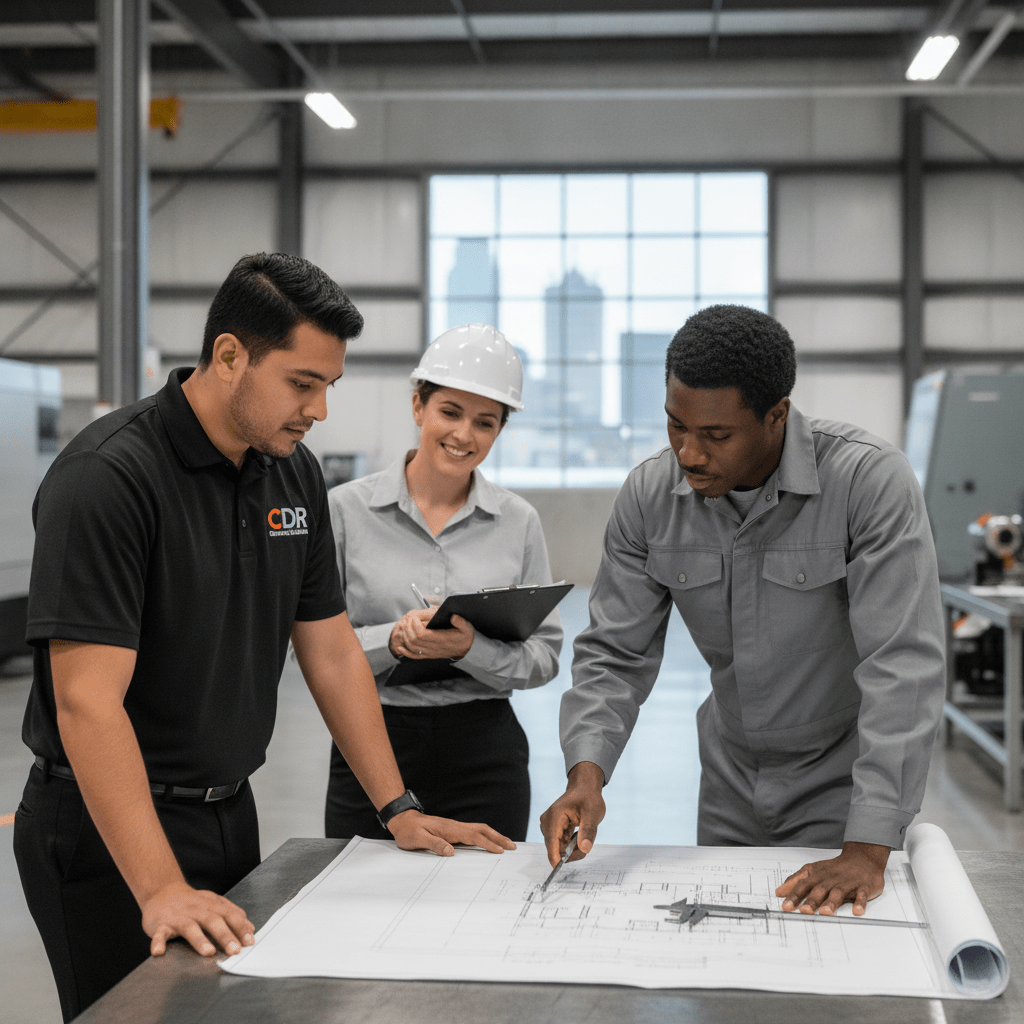
- Blueprint & Schematic Evaluations: We don’t just ask if they can read a blueprint; we hand them one. We ask them to identify key components, explain connections, and calculate dimensions directly from the drawing. This immediately separates the experts from the novices and prevents costly errors from misinterpretation.
- Trade Math & Measurement Tests: Can the candidate accurately use calipers and micrometers? Can they perform the necessary calculations for offsets, tolerances, and material needs? A simple, practical math test can prevent costly errors down the line and ensure quality control.
- Practical, Hands-On Assessments: For roles like assemblers or technicians, we conduct performance-based tests that replicate the tasks they’ll be doing on your floor. This process does more than just confirm technical skills. It reveals a candidate’s problem-solving process, their attention to detail, and how they handle pressure. It’s an audition, not just an interview.
The CDR Difference: Why Our Vetting Goes Deeper
As a local, Minority-Owned and Disabled Veteran-Certified staffing agency, we built CDR General Solutions to be the antithesis of the national mega-franchises. We don’t have quotas to fill; we have partnerships to build. Our anti-franchise agility means we’re hyper-responsive and deeply invested in the DFW community. We understand the unique challenges of the Metroplex because we live and work here too.
Culture & Attitude-First Interviewing
Technical ability is only half the battle. A candidate with all the skills in the world can still disrupt a team if they have a poor attitude, lack a strong work ethic, or aren’t coachable. That’s why our vetting process puts a heavy emphasis on screening for these critical soft skills. We select for reliability, a positive attitude, and a commitment to safety, ensuring that every candidate we place is not just a skilled worker, but a valuable team member.
Bilingual Onboarding & OSHA Safety Leadership
In the diverse manufacturing and logistics environments of Dallas and Fort Worth, clear communication is a critical safety issue. Our bilingual onboarding and safety leadership bridge the communication gap between English-speaking and Spanish-speaking crews. This ensures that safety protocols are understood by everyone, reducing the risk of accidents and fostering a more inclusive and efficient work environment.
| Vetting Approach | Typical National Agency | CDR General Solutions (The DFW Specialist) |
|---|---|---|
| Technical Screening | Keyword match on a resume | Hands-on blueprint, schematic, and trade math evaluations |
| Attitude & Work Ethic | Basic interview questions | In-depth screening for coachability, reliability, and team fit |
| Safety & Onboarding | Generic safety video | Bilingual-led OSHA safety training and onboarding |
| Market Focus | Nationwide, one-size-fits-all | Hyper-focused on the Dallas-Fort Worth Metroplex |
| Accountability | Often passes responsibility to the client | Zero No-Show Commitment and direct, local support |
Frequently Asked Questions (FAQs)
- What is technical vetting for manufacturing roles?
- Technical vetting is the process of verifying a candidate’s practical, job-specific skills through hands-on testing. Instead of just asking if they can perform a task, you require them to demonstrate it. For manufacturing, this often includes blueprint interpretation, using measurement tools like calipers, and performing basic trade-related math calculations to ensure they can meet quality and production standards.
- Why is cultural fit so important for skilled trades teams in Dallas?
- In a high-pressure, deadline-driven environment like DFW’s manufacturing and logistics sectors, teamwork and communication are essential. A worker with a poor attitude or a lack of accountability can disrupt an entire production line, regardless of their technical skill. Screening for cultural fit ensures you’re hiring someone who is reliable, coachable, and will positively contribute to the team’s morale and productivity.
- How does a local, veteran-owned agency differ from a large national chain?
- A local agency provides a level of agility and personalized service that large chains often can’t match. As a Disabled Veteran-Certified and Minority-Owned business, we offer a partnership approach, with a deep understanding of the local DFW market. We focus on building long-term relationships and providing customized solutions, like our hand-in-hand vetting and bilingual support, rather than just filling a quota. This also helps companies meet supplier diversity goals.
Partner with a Pro to Stop Hiring Mistakes
Your production goals are too important to leave to chance. It’s time to stop sorting through stacks of questionable resumes and start interviewing candidates who have already been proven to have the skills and the attitude you need. Let CDR General Solutions implement our rigorous, hands-on vetting process for you.
Call us now at 972-358-3722 to speak directly with one of our staffing specialists!
Or, if you prefer, fill out the contact form on our website, and we will reach out to schedule a complimentary, no-obligation consultation to assess your needs.