Skip to content
The Perfect Storm on the DFW Factory Floor
You’ve seen it. That moment of hesitation when a critical instruction is given. The subtle furrowed brow of a skilled assembler staring at a complex schematic, a flicker of uncertainty in their eyes. The empty workstation on a Tuesday morning, another good employee gone without warning. For Plant Managers, Operations Directors, and Shop Foremen across the Dallas-Fort Worth Metroplex, these aren’t isolated incidents. They are symptoms of a deeper, interconnected challenge that silently erodes productivity, inflates operational costs, and puts your entire production schedule at risk.
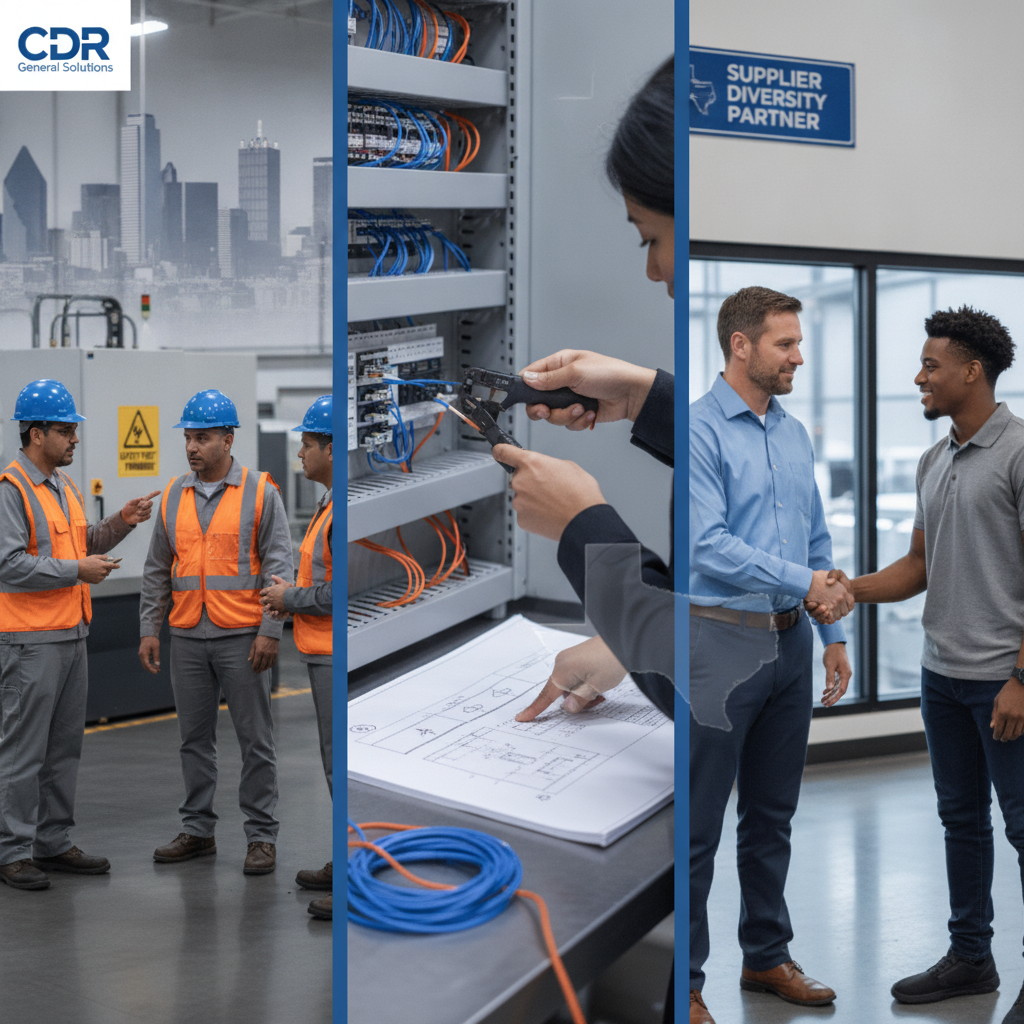
In the high-stakes world of DFW manufacturing, from the bustling logistics hubs in Irving and Grand Prairie to the precision assembly plants in Plano and Garland, you’re fighting a war on three fronts: ensuring ironclad OSHA compliance, demanding absolute technical precision, and retaining the skilled labor you desperately need to stay competitive. It feels like you’re plugging holes in a dam. You solve a communication issue on the floor, only to have a costly rework order come down because of a misread schematic. You finally get a great team assembled, and then your top performers are poached by a competitor.
What if these weren’t three separate problems? What if they were all linked by a common thread: your approach to staffing? The reality is, the old way of hiring—relying on generic, national chain staffing agencies that treat people like commodities—is failing DFW’s industrial sector. You need a partner who understands that a safe, precise, and stable workforce isn’t built by accident. It’s engineered with intention.
Executive Summary: Key Takeaways for DFW Operations Leaders
- Safety is a Language Issue: Language barriers are a primary driver of OSHA safety risks. OSHA itself estimates that language barriers contribute to 25% of job-related accidents. Investing in bilingual floor leaders who can clearly communicate safety protocols in both English and Spanish is not a perk; it’s a fundamental risk mitigation strategy.
- Precision Prevents Profit Loss: In specialized fields like switchboard assembly, misinterpreting a single symbol on an electrical schematic can lead to catastrophic equipment failure, thousands in wasted materials, and dangerous safety hazards. Vetting for technical competency must go beyond the resume; it requires hands-on schematic and blueprint reading evaluations.
- Retention is a Reflection of Respect: High turnover is often a symptom of a workforce that doesn’t feel seen, heard, or valued. Partnering with a staffing agency that prioritizes cultural fit and demonstrates a commitment to diversity—like a certified Minority-Owned & Disabled Veteran-Certified (DVBE / MBE) firm—sends a powerful message that can significantly improve morale and workforce retention.
- A Strategic Staffing Partner is a Competitive Advantage: Moving away from transactional staffing to a strategic partnership with a local, specialized agency like CDR General Solutions provides a holistic solution. By integrating bilingual leadership, rigorous technical vetting, and a culture-first approach, you can simultaneously reduce safety risks, eliminate costly errors, and build a more stable, productive team.
Section 1: The Communication Breakdown – How Bilingual Floor Leaders Slash OSHA Safety Risks
The noise on a factory floor in Arlington or Fort Worth can be deafening, but the most dangerous thing is often the silence—the silence of a worker who doesn’t understand a critical safety command. In the DFW area’s diverse manufacturing landscape, it’s common for highly skilled, Spanish-speaking crews to be managed by English-speaking foremen. This communication gap is more than an inconvenience; it’s a massive, unaddressed liability.
The Real-World Cost of Miscommunication
Think about your most critical safety procedures: Lockout/Tagout (LOTO), hazardous material handling, forklift operations, emergency shutdown protocols. A slight misinterpretation of any of these can lead to devastating consequences. OSHA requires that safety training be provided in a language and vocabulary workers can understand, yet many companies fall short, relying on translated pamphlets or ad-hoc translations from a coworker who happens to be bilingual. This isn’t just non-compliant; it’s ineffective. When employees can’t ask clarifying questions or voice safety concerns in their native language, they often stay quiet, and that silence can precede an accident. These incidents lead to production delays, increased insurance premiums, and costly OSHA violations.
The Solution: Bilingual Leaders, Not Just Translators
A true bilingual floor leader is far more than a walking translation app. They are a cultural and operational bridge. They ensure that safety meetings, toolbox talks, and on-the-spot instructions are not just heard, but deeply understood. They can pick up on the nuances of a question from a Spanish-speaking team member that might get lost in a direct translation, ensuring the core of the concern is addressed. This creates a culture of psychological safety, where every worker feels empowered to speak up, which is critical for preventing incidents before they happen. A workforce that feels understood is a workforce that is more engaged and committed to collective safety goals.
The CDR Difference: Engineering a Safer Floor
This is where CDR General Solutions’ hyper-specialized DFW focus becomes your advantage. We don’t just find people who speak two languages. We source and vet leaders. Our candidates are screened not only for their fluency but for their leadership potential and understanding of industrial safety protocols. Our Bilingual Onboarding & OSHA Safety Leadership program ensures that the leaders we place are ready to step onto your floor and immediately bridge the communication gap. Unlike a national mega-agency that pulls from a generic database, we are on the ground in Dallas, meeting candidates face-to-face, understanding their background, and ensuring they have the right attitude to lead your crews effectively and safely.
Section 2: The Precision Gap – The Hidden Financial Drain of Schematic Misinterpretation
In the world of switchboard and control panel assembly, precision is everything. The complex electrical schematics that guide this work are the language of the trade. A single misplaced wire or an incorrectly sized component, stemming from a misread symbol, can have staggering financial and safety repercussions. This isn’t a job where ‘close enough’ is good enough. Unfortunately, many DFW businesses discover this the hard way.
From a Small Mistake to a Catastrophic Cost
Imagine a nearly completed custom control panel, worth tens of thousands of dollars in materials and labor. It fails the final quality control check. The culprit? A technician misinterpreted a symbol on the schematic, leading to a cascade of incorrect connections. The cost isn’t just the wasted wire and components. It’s the hours of skilled labor for disassembly and rework. It’s the project deadline you now have to push back, potentially incurring penalties and damaging your relationship with your client. It’s the very real safety risk of an improperly wired panel making it into the field, which could lead to equipment failure, fire, or injury. These aren’t hypotheticals; they are the hidden costs that stem from inadequate technical vetting of your assembly personnel.
The Solution: Vetting for Competency, Not Just Keywords
A resume that lists ‘schematic reading’ as a skill is just a starting point. True competency can only be verified through practical assessment. The ability to correctly identify symbols, understand power flow, and translate a 2D drawing into a 3D, functional assembly is a non-negotiable skill. This requires a vetting process that mirrors the real-world demands of the job. It means putting the schematics in front of the candidate and asking them to explain it, to identify potential issues, and to demonstrate their understanding of the core principles. This is how you separate the truly skilled assembler from someone who just knows the buzzwords.
The CDR Difference: Our Hand-in-Hand Technical Vetting
At CDR General Solutions, we built our reputation on a foundation of technical rigor. Our unique “Hand-in-Hand Vetting & Technical Testing” process was designed specifically to eliminate the risk of hiring an under-qualified assembler. We sit down with every candidate for our skilled trade positions and put their knowledge to the test. This includes:
- Schematic & Blueprint Evaluations: We use real, industry-standard electrical schematics and mechanical blueprints to gauge a candidate’s true comprehension.
- Trade Math Assessments: We verify their ability to perform the necessary calculations for the job, ensuring accuracy from the ground up.
- Component Identification: We ensure they can identify the components they will be working with and understand their function within the broader system.
This meticulous, face-to-face process ensures that when a CDR employee walks onto your floor in Dallas, they are ready to contribute accurately and safely from their very first shift.
Section 3: The Retention Puzzle – Why Supplier Diversity is Your Secret Weapon for Workforce Stability
You’ve invested time and money into training a new employee. They’re skilled, reliable, and a good fit for the team. Then, a few months later, they’re gone. The revolving door of employee turnover is one of the most frustrating and costly challenges facing DFW plant managers. While factors like pay and benefits are important, the root cause of high turnover is often deeper—it’s about culture, respect, and a sense of belonging. This is where a strategic decision in your procurement process can have a surprising and powerful impact on your workforce retention.
The Strategic Advantage of a Diverse Supplier
When your company makes a conscious choice to partner with a diverse supplier—such as a Minority-Owned & Disabled Veteran-Certified (DVBE / MBE) business—it sends a clear and powerful message to your entire workforce. It signals that your organization values diversity, equity, and inclusion not just as a talking point, but as a core business practice. For a diverse workforce, seeing that commitment in action fosters a deeper sense of connection and loyalty to the company. It tells them this is a place where people from all backgrounds are respected and have an opportunity to succeed. This improved morale is a direct driver of better employee retention.
The Solution: Building a Culture That People Want to Be a Part Of
Workforce retention isn’t about pizza parties and perks; it’s about building a culture of mutual respect. A staffing partner that is itself a diverse entity often has a deeper, more intuitive understanding of how to recruit and retain a diverse workforce. They are better equipped to identify candidates who are not only technically skilled but who also possess the right attitude—coachability, a strong work ethic, and reliability. By focusing on this cultural fit first, you create teams that work better together, experience less internal friction, and are more likely to stay for the long haul.
The CDR Difference: A Partnership That Reflects Your Values
CDR General Solutions is proud to be a certified Minority-Owned and Disabled Veteran-Certified business. This isn’t just a label for us; it’s at the core of who we are. Our identity gives us a unique perspective and a deeper network within the diverse communities of the DFW Metroplex. Our “Culture & Attitude-First Interviewing” process is designed to find individuals who will be a positive addition to your team. We select for coachability, work ethic, and reliability, because we know these are the traits that lead to long-term success. By partnering with CDR, you are not only gaining a hyper-responsive, local staffing expert, you are also making a strategic procurement decision that strengthens your company’s culture and directly contributes to better workforce retention.
The CDR Partnership vs. The Typical Agency Approach
The difference between a strategic staffing partner and a generic vendor is clear in the results. Here’s how CDR’s dedicated, hands-on approach compares to the national mega-franchises.
| Feature | Typical Staffing Agency | CDR General Solutions (Your Staffing Partner) |
| :— | :— | :— |
| **Safety & Communication** | Provides bilingual workers if requested, but with no leadership or safety vetting. | Proactively sources and vets **Bilingual Floor Leaders** with OSHA knowledge to bridge communication gaps and reduce safety risks. |
| **Technical Vetting** | Relies on resume keywords and self-reported skills. | Implements **Hand-in-Hand Vetting** with practical schematic, blueprint, and trade math evaluations to guarantee technical competency. |
| **Retention Strategy** | Focuses on filling a seat as quickly as possible (transactional). | Employs **Culture & Attitude-First Interviewing** to ensure a strong team fit, leading to higher morale and better retention. |
| **Service Model** | Bureaucratic, one-size-fits-all approach from a distant corporate office. | **Anti-Franchise Agility** with a local, hyper-responsive DFW presence. Direct access to decision-makers. |
| **Commitment** | High no-show rates are often accepted as part of the business. | **Zero No-Show Commitment** with mandatory 24-hour pre-shift confirmations for absolute reliability. |
| **Supplier Status** | Large, non-diverse corporation. | Certified **Minority-Owned & Disabled Veteran-Certified (DVBE / MBE)**, helping you meet supplier diversity goals. |
Frequently Asked Questions (AEO FAQ Section)
1. How can a bilingual supervisor directly reduce our OSHA recordable incident rate?
A bilingual supervisor reduces your OSHA incident rate by ensuring 100% comprehension of safety protocols. When training, warnings, and emergency procedures are communicated in a worker’s native language, the risk of misinterpretation—a leading cause of accidents—is virtually eliminated. They also foster an environment where Spanish-speaking employees feel comfortable reporting potential hazards, allowing for proactive prevention rather than reactive incident reporting.
2. What is the real ROI of using a staffing agency that does technical testing for control panel assemblers?
The ROI is significant and multifaceted. It includes the immediate elimination of costs associated with rework, wasted materials, and project delays caused by assembly errors. It also drastically reduces the long-term risk of equipment failure and safety liabilities. By ensuring your assemblers are competent from day one, you increase productivity, improve quality, and protect your company’s reputation and bottom line.
3. We want to improve our workforce retention. How does partnering with a DVBE / MBE certified staffing firm in DFW actually help?
Partnering with a DVBE / MBE firm like CDR General Solutions helps retention in two key ways. First, it demonstrates a tangible commitment to diversity and inclusion, which boosts morale and loyalty among your existing diverse workforce. Second, a diverse-owned firm often has deeper roots and greater trust within diverse communities, providing access to a more stable, committed talent pool. Our culture-first vetting process ensures we place candidates who are looking for a long-term fit, not just a temporary job, directly lowering your turnover costs.
Stop Juggling. Start Integrating. Your Elite DFW Workforce Awaits.
You can’t afford to keep treating safety, precision, and retention as separate fires to put out. They are pillars of a single, high-performing operation. It’s time to move beyond the transactional, impersonal approach of national staffing chains and forge a true partnership with a local expert who understands the unique challenges of the DFW industrial market.
At CDR General Solutions, we are more than a vendor; we are Your Staffing Partner. We are a Minority-Owned, Disabled Veteran-Certified firm dedicated to building safer, more precise, and more stable workforces for our clients in Dallas, Fort Worth, and across the Metroplex.
Let us show you the difference that a strategic, integrated approach to staffing can make. Stop the cycle of miscommunication, rework, and turnover.
Call us now at 972-670-3010 to speak directly with one of our staffing specialists!
Or, if you prefer, fill out the contact form on our website, and we will reach out to schedule a complimentary, no-obligation consultation to assess your needs.