
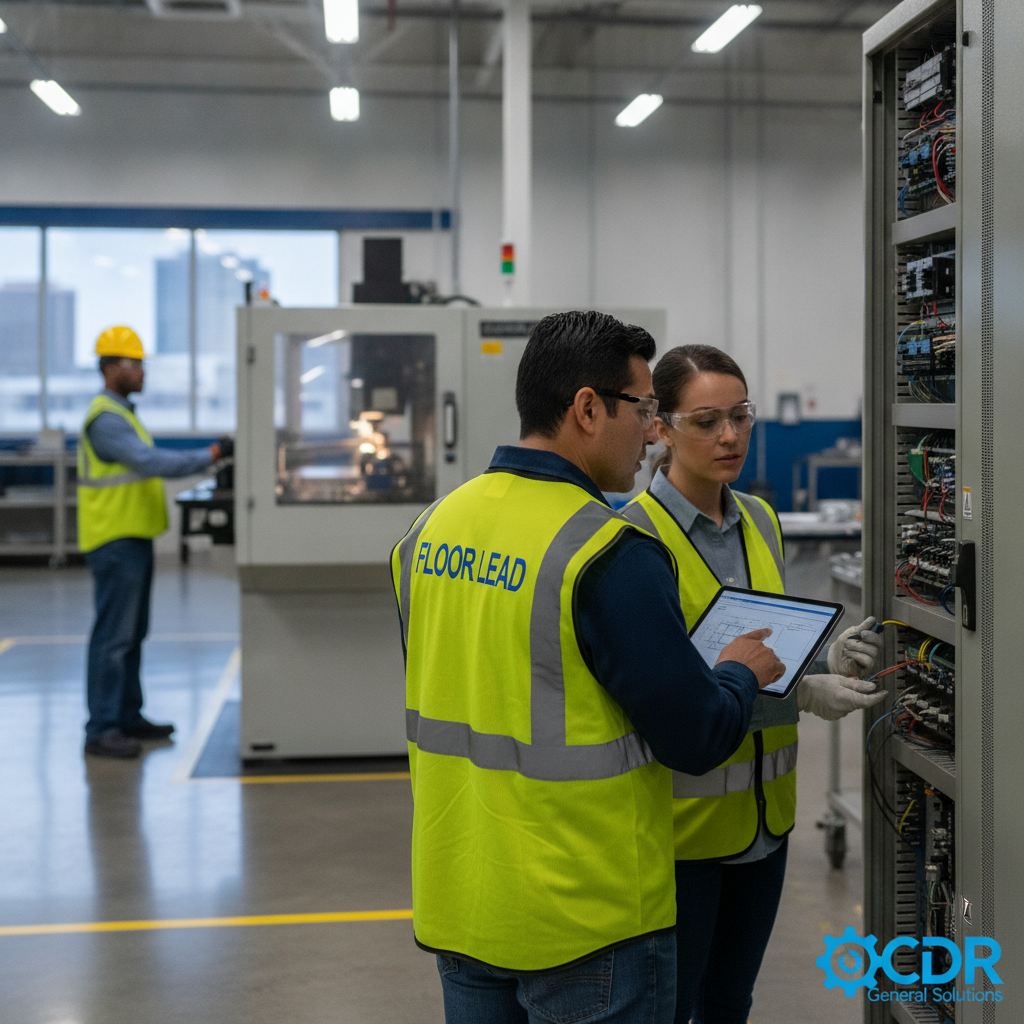
The Trifecta of Hidden Risks Sinking DFW Production Goals
For a plant manager in Dallas-Fort Worth, the day often starts with a new set of operational fires to put out. One minute, you’re reviewing an OSHA incident report from a preventable accident on the line. The next, you’re looking at a pallet of rejected switchboards, scrapped because of a tiny, misunderstood detail on an electrical schematic. And to top it off, another skilled assembler has just put in their two weeks’ notice, leaving a critical gap in your production team. These aren’t isolated problems; they are interconnected symptoms of a deeper operational vulnerability.
In the fast-paced DFW manufacturing sector, overlooking the nuanced risks tied to your workforce can lead to catastrophic failures in safety, quality, and retention. The true costs are hidden in project delays, rework, increased insurance premiums, and a constant, draining cycle of hiring and retraining. This article unpacks three of the most critical, yet often underestimated, risks facing DFW factories today and provides a clear, actionable playbook for turning them into strategic advantages.
Executive Summary: Key Takeaways for DFW Leaders
- Communication Gaps are Safety Gaps: Language barriers are a direct contributor to OSHA-recordable incidents. OSHA estimates that language barriers are a factor in 25% of on-the-job accidents, a risk that is amplified in high-risk sectors like manufacturing.
- Technical Misinterpretation Cripples Quality: A single misread electrical schematic can lead to complete board failure, costly rework, and significant project delays. These errors often stem from a lack of specialized vetting during the hiring process.
- Supplier Diversity is a Retention Strategy: Partnering with a certified minority-owned (MBE) and disabled-veteran (DVBE) staffing agency isn’t just a procurement goal; it’s a direct path to a more resilient, engaged, and loyal workforce. It widens the talent pool and fosters an inclusive culture that improves retention.
- An Integrated Staffing Solution is the Key: Addressing these challenges in silos is inefficient. A strategic staffing partner who understands the technical, safety, and cultural needs of the DFW market is essential for sustainable growth.
The Hidden Cost of Misinterpreting Electrical Schematics in Switchboard Assembly
In the world of precision manufacturing, the electrical schematic is the source of truth. For switchboard and control panel assemblers, it’s the blueprint for a product that must be perfect. A single misplaced wire or incorrect component, born from a moment of misinterpretation, doesn’t just create a faulty product—it creates a domino effect of hidden costs that ripple through your entire operation.
Beyond Rework: The Financial and Safety Domino Effect
When a schematic error makes it to the factory floor, the most obvious cost is scrap and rework. But the financial bleeding doesn’t stop there. Consider the downstream impacts:
- Project Delays: A rejected batch of switchboards can halt an entire construction or installation project, triggering penalty clauses and damaging client relationships.
- Wasted Labor Hours: The time spent diagnosing the problem, disassembling the faulty unit, and re-assembling it correctly is time that could have been spent on new production.
- Safety Hazards: An incorrectly wired panel isn’t just non-functional; it’s a potential fire or arc flash hazard. These hidden dangers put your team and end-users at serious risk.
- Reputational Damage: Consistently delivering faulty products due to assembly errors quickly erodes your reputation for quality and reliability in the competitive DFW market.
The challenge is that interpreting complex wiring diagrams and ensuring precise component placement requires immense attention to detail and the ability to troubleshoot on the fly. It’s a skill that a standard interview or resume review simply cannot verify.
Why Standard Vetting Fails for Control Panel Assemblers
Many staffing agencies, especially large national franchises, treat skilled trades like a commodity. They match keywords on a resume to a job description, but they lack the technical expertise to truly vet a candidate’s abilities. They don’t know how to read a blueprint, they can’t evaluate a candidate’s understanding of schematic logic, and they don’t test for the specific trade math required for the job. This superficial approach is why so many DFW plant managers end up with assemblers who look good on paper but can’t perform on the floor.
How Bilingual Floor Leaders Reduce OSHA Safety Risks in DFW Factories
Now, imagine adding a language barrier to the technical complexity of switchboard assembly. An English-speaking foreman tries to explain a critical change to a Spanish-speaking assembly team. Nuance is lost, a question goes unasked for fear of misunderstanding, and a critical connection is wired incorrectly. This isn’t a hypothetical; it’s a daily reality in many DFW factories, and it’s a massive safety risk.
More Than Translations: True Safety Leadership on a Diverse Floor
OSHA is clear: employers must provide safety training in a language and vocabulary that workers can understand. Yet, many companies stop at translated safety manuals. This is not enough. True safety requires clear, real-time communication, especially in high-risk manufacturing environments. This is where bilingual floor leaders become indispensable. They don’t just translate; they bridge cultural and communication gaps. A bilingual supervisor can:
- Confirm Understanding: Ensure that every team member, regardless of their primary language, fully comprehends safety protocols and task instructions.
- Encourage Questions: Create a psychologically safe environment where workers feel comfortable speaking up about potential hazards or uncertainties without a language barrier.
- Provide Immediate Clarification: Instantly resolve confusion on the floor, preventing the small misunderstandings that often lead to big accidents.
The data is sobering. The U.S. Centers for Disease Control found that fatal injury rates were significantly higher for foreign-born Hispanic workers compared to native-born Hispanic workers, a gap often attributed to language barriers. Investing in bilingual leadership isn’t just good for morale; it’s a critical risk management strategy.
Why Supplier Diversity in DFW Procurement Drives Better Workforce Retention
You’ve identified the technical and safety risks. But how do you build a team that is skilled, safe, and stable? The answer may lie in your procurement strategy. For many DFW companies, supplier diversity is a corporate goal, a box to be checked. But when you strategically partner with a certified Minority-Owned (MBE) and Disabled Veteran-Certified (DVBE) staffing firm, you’re not just meeting a quota—you’re unlocking a powerful solution to your workforce challenges.
Moving Beyond a Checkbox to Solve Real Problems
A diverse supplier is, by definition, deeply connected to a wider and more diverse talent pool. For a DFW plant manager, this means access to the very candidates you need: skilled, bilingual technicians who are often overlooked by mainstream recruitment channels. A company like CDR General Solutions, with its MBE and DVBE certifications, has built its entire business model on understanding and serving this exact workforce.
This approach fosters a more inclusive workplace, which is a key driver of employee retention. When employees see that their employer makes a conscious effort to partner with businesses that reflect their own backgrounds, it builds a powerful sense of belonging and loyalty. This isn’t just theory; organizations with inclusive cultures are significantly more likely to achieve better business outcomes and retain top talent.
The CDR Difference: An Integrated Solution for DFW’s Toughest Challenges
At CDR General Solutions, we see these three challenges—technical skill gaps, safety risks from communication barriers, and poor workforce retention—as one interconnected problem. Our entire approach is built to solve it. We are not a mega-franchise that pushes paper. We are a local, DFW-focused, Minority-Owned and Disabled Veteran-Certified agency that provides a level of vetting and support that other agencies can’t match.
Comparison: The CDR Vetting Process vs. Traditional Staffing
| Feature | Traditional Staffing Agency | CDR General Solutions |
| :— | :— | :— |
| **Technical Vetting** | Keyword matching on resumes | **Hand-in-Hand Technical Testing:** Live blueprint and schematic evaluations. |
| **Candidate Screening** | Brief phone screen | **Culture & Attitude-First Interviewing:** Screening for work ethic and reliability. |
| **Onboarding** | Standard paperwork | **Bilingual Onboarding & Support:** Ensuring clear communication from day one. |
| **Reliability** | High no-show rates | **Zero No-Show Commitment:** Mandatory 24-hour pre-shift confirmations. |
| **Market Focus** | National, bureaucratic | **Anti-Franchise Agility:** Hyper-responsive, local DFW presence. |
We solve the schematic interpretation problem by conducting rigorous, face-to-face technical testing. We solve the OSHA safety risk by specializing in bilingual workforce staffing and providing leaders who can ensure clear communication. And we solve the retention problem by being the very type of diverse supplier that fosters an inclusive, supportive environment where skilled workers want to stay.
Frequently Asked Questions (FAQ)
1. How does a bilingual floor leader specifically prevent accidents in a factory?
A bilingual leader ensures that critical safety information, such as lockout/tagout procedures or hazard communication, is not just translated but truly understood. They can confirm comprehension in real-time, answer questions in a worker’s native language, and eliminate the hesitation that non-native English speakers might have about reporting a potential hazard.
2. What is the real cost of hiring a switchboard assembler who can’t properly read schematics?
The immediate cost is rework and wasted materials. The larger, hidden costs include project delays, potential damage to expensive equipment during startup, safety risks like arc flash, and significant damage to your company’s reputation for quality. A single mistake can easily wipe out the profit margin on a project.
3. Why should my company prioritize a staffing agency with MBE or DVBE certification?
Prioritizing a certified diverse supplier helps you meet corporate diversity spend goals while also giving you a competitive advantage. These agencies, like CDR General Solutions, often have deeper connections into diverse talent pools, providing access to highly skilled, bilingual candidates you might otherwise miss. This commitment to inclusion also enhances your brand reputation and improves workforce retention by creating a more welcoming culture.
Your DFW Workforce Partner is a Phone Call Away
Stop treating your staffing needs as a transactional problem. The safety of your team, the quality of your product, and the stability of your workforce are too important. Partner with a local DFW expert who understands the technical and cultural nuances of your factory floor. Partner with CDR General Solutions.
Call us now at 972-670-3010 to speak directly with one of our staffing specialists!
Or, if you prefer, fill out the contact form on our website, and we will reach out to schedule a complimentary, no-obligation consultation to assess your needs.