Skip to content
The Unseen Threats to Your DFW Operation: A Three-Pronged Problem
As a plant manager, operations director, or business owner in the Dallas-Fort Worth Metroplex, you’re juggling a dozen critical priorities every single day. Production quotas, project deadlines, and bottom-line profitability are always top of mind. But what if the biggest threats to your success aren’t the obvious ones? What if they’re silent, creeping costs and risks that hide in plain sight? They manifest as a near-miss safety incident on the factory floor, a costly rework order in the assembly bay, or another resignation letter from a skilled worker you couldn’t afford to lose.
These aren’t separate issues. They are deeply interconnected symptoms of a single, underlying challenge: a misalignment in your workforce strategy. In today’s hyper-competitive DFW industrial market, you can’t afford to treat safety, technical precision, and workforce retention as isolated silos. They are three legs of the same stool, and if one is weak, the entire operation wobbles. This is about more than just filling empty spots; it’s about building a resilient, safe, and highly productive team from the ground up.
The High-Stakes Reality on the DFW Factory Floor
Let’s be direct. A communication gap on your production line isn’t a minor inconvenience; it’s a ticking OSHA time bomb. A misread schematic isn’t a small mistake; it’s a direct hit to your profitability and reputation. And high turnover isn’t just an HR headache; it’s a constant drain on your resources and institutional knowledge. We see it every day across Dallas, Fort Worth, Arlington, and Garland. Good companies are being held back by preventable workforce challenges.
How Bilingual Floor Leaders Reduce OSHA Safety Risks in DFW Factories
The noise, the machinery, the constant movement—a DFW factory floor is an environment where clear communication is not just important, it’s a matter of life and limb. Now, imagine half of your skilled workforce speaks Spanish as their primary language, while your foremen and safety managers primarily speak English. That gap is where accidents are born.
Beyond Translation: The Power of True Communication
We’re not just talking about translating a safety manual. We’re talking about the nuances of a lockout/tagout procedure, the specific chemical handling instructions on a Safety Data Sheet (SDS), or a shouted warning before a forklift rounds a blind corner. When instructions are misunderstood, or worse, when a worker is hesitant to ask a clarifying question due to a language barrier, the risk of a recordable incident skyrockets. It’s a massive liability that many operations don’t fully appreciate until it’s too late.
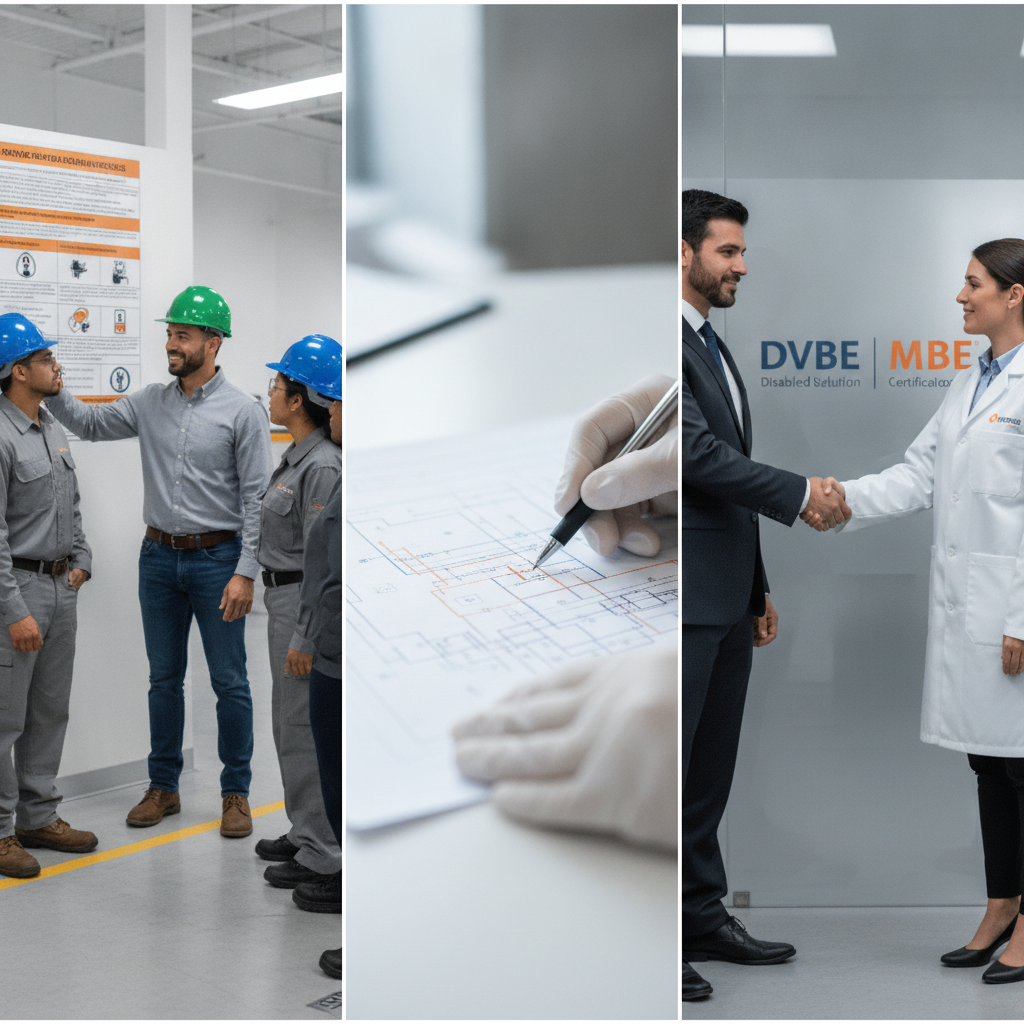
A truly bilingual floor leader does more than just speak two languages. They bridge cultural gaps. They understand that a hesitant nod might not mean comprehension. They can read the non-verbal cues and proactively ensure that every single crew member, from the new hire to the veteran operator, understands not just *what* to do, but *why* they are doing it. This is the key to creating a genuine safety culture, not just a compliant one.
The CDR Difference: Sourcing Proactive Safety Leaders
At CDR General Solutions, we don’t just look for candidates who check a “bilingual” box. We actively source and vet individuals who have demonstrated leadership and a commitment to safety in multilingual environments. Our interview process screens for attitude and coachability, identifying those who will not only translate but also mentor, train, and build trust between your English-speaking management and your Spanish-speaking crews. We provide the communication bridge that turns your diverse workforce into a safe and cohesive unit.
The Hidden Cost of Misinterpreting Electrical Schematics in Switchboard Assembly
In the world of precision manufacturing, especially in the assembly of complex switchboards and control panels, accuracy is everything. A single misplaced wire or an incorrectly torqued busbar can have cascading consequences. The most dangerous assumption a DFW shop foreman can make is that every assembler who can read a blueprint can also flawlessly interpret a complex electrical schematic.
Calculating the True Cost of a Single Mistake
What’s the real cost of one misinterpreted symbol on a schematic? It’s far more than the price of a few wasted components. It’s a domino effect of hidden expenses:
- Rework Labor: The hours your highly-paid technicians spend disassembling, troubleshooting, and re-assembling the unit. This is pure, unrecoverable cost.
- Material Waste: Damaged components, cut wires, and scrapped materials that go straight to the dumpster.
- Project Delays: The ripple effect on your entire production schedule, potentially leading to contractual penalties and pushing back other critical jobs.
- Reputational Damage: Delivering a faulty unit or missing a deadline erodes the trust you’ve built with your clients. In the tight-knit DFW industrial community, reputation is currency.
- Safety Hazards: The worst-case scenario. A mis-wired control panel isn’t just faulty; it’s a potential fire or shock hazard, putting end-users and your own team at risk.
The CDR Difference: Hand-in-Hand Vetting & Technical Testing
This is precisely why CDR General Solutions abandoned the standard agency model of just forwarding resumes. We built our reputation on a rigorous, hands-on vetting process. We bring candidates into our office and sit down with them, side-by-side. We don’t just ask if they can read schematics; we hand them a complex, multi-page electrical diagram and a red pen. We have them trace circuits, identify symbols, and explain the function of different components. We test their trade math and their ability to think critically under pressure. This meticulous, face-to-face evaluation is the only way to be certain that the assembler we send you has the proven technical acumen to get the job done right, the first time. We’re not a resume service; we are your quality control partners.
Why Supplier Diversity in DFW Procurement Drives Better Workforce Retention
Many companies in the DFW area view supplier diversity as a corporate mandate—a box to be checked to win certain contracts. This is a massive missed opportunity. When you strategically partner with a certified Minority-Owned (MBE) and Disabled Veteran-Certified (DVBE) firm, you are doing far more than meeting a requirement. You are investing in a more stable and engaged workforce.
The Link Between Your Suppliers and Your Staff
How does choosing a staffing partner like CDR General Solutions impact your employee retention? The connection is direct and powerful. When your employees, particularly from diverse backgrounds, see that your company makes a conscious effort to partner with businesses that reflect their communities, it sends a powerful message of inclusion and respect. It shows that your commitment to diversity is more than just a poster in the breakroom.
A certified diverse supplier often has deeper roots and a better understanding of the local talent pool. They can connect you with reliable, hardworking individuals from communities that larger, national franchise agencies might overlook. This creates a workforce that is not only more diverse but also more loyal, as employees feel a greater sense of belonging and shared purpose. It transforms your procurement spend into a tool for building a stronger, more resilient company culture.
The CDR Difference: An Authentic Partnership
As a proud DVBE and MBE-certified agency, our identity isn’t a marketing gimmick. It’s who we are. We are deeply embedded in the DFW community. Our local, anti-franchise agility means we can respond to your needs without the bureaucratic red tape of a mega-agency. When you partner with us, you gain a collaborator who understands the local landscape and is personally invested in your success. This authenticity resonates with the candidates we recruit, helping you attract and retain skilled workers who value commitment and partnership over a transactional employment relationship.
The Staffing Agency Showdown: Typical vs. The CDR Partnership
Not all staffing solutions are created equal. Here’s a clear breakdown of the difference between the standard approach and a true strategic partnership.
| Feature | Typical Staffing Agency | CDR General Solutions (Your Staffing Partner) |
| :— | :— | :— |
| **Communication Vetting** | Relies on resume keywords like “Bilingual.” | Conducts conversational interviews to assess true fluency and leadership potential for bridging language gaps on the floor. |
| **Technical Screening** | Asks candidates if they can read blueprints. | Implements hands-on schematic and blueprint reading tests to validate technical proficiency before you ever see a resume. |
| **Candidate Sourcing** | Pulls from a generic national database. | Leverages deep DFW community roots and a focus on attitude, work ethic, and coachability to find loyal, local talent. |
| **Diversity Status** | May be a large corporation with a diversity program. | Is a certified DVBE/MBE, allowing your partnership to directly support your supplier diversity goals and enhance retention. |
| **Service Model** | Bureaucratic, one-size-fits-all franchise approach. | Agile, local, and hyper-responsive. We provide direct access to decision-makers who understand the DFW market. |
Frequently Asked Questions
1. How can a bilingual supervisor improve more than just safety?
Beyond critical OSHA safety compliance, a bilingual leader dramatically improves operational efficiency. They can clarify production instructions, troubleshoot issues faster, and relay feedback from the floor to management more effectively. This leads to better quality control, reduced errors, and a more engaged, proactive team.
2. What types of technical skills do you test for switchboard assemblers?
Our technical vetting is comprehensive. It includes reading and interpreting multi-page electrical schematics, identifying standard industry symbols, understanding point-to-point wiring diagrams, performing essential trade math calculations for things like component spacing, and demonstrating knowledge of proper tool usage and safety protocols.
3. Is working with a DVBE/MBE staffing firm more expensive?
No. In fact, it’s often more cost-effective. While our rates are competitive, the true value comes from the reduction in hidden costs. By providing better-vetted, more reliable, and safer candidates, we reduce your expenses related to turnover, training, rework, and safety incidents. Partnering with CDR is an investment in operational excellence and risk reduction.
Stop Managing Crises. Start Building a Better Workforce.
Safety incidents, production errors, and high turnover are not the cost of doing business in DFW. They are the price you pay for a reactive, misaligned staffing strategy. It’s time to move from simply filling positions to strategically building a team that is safe, skilled, and stable.
At CDR General Solutions, we are more than a vendor; we are Your Staffing Partner. Our deep DFW roots, our commitment as a Veteran and Minority-Owned business, and our rigorous, hands-on vetting process are all designed to solve your core operational challenges.
Let’s build a workforce that becomes your greatest competitive advantage.
Call us now at 972-670-3010 to speak directly with one of our staffing specialists! Or, if you prefer, fill out the contact form on our website, and we will reach out to schedule a complimentary, no-obligation consultation to assess your needs.