Skip to content
The Three Hidden Risks Tanking DFW Operations
In the fast-paced industrial landscape of the Dallas-Fort Worth Metroplex, plant managers and shop foremen are juggling more than ever. Production quotas, tight deadlines, and supply chain headaches are just the start. But beneath the surface, three critical risks are quietly eroding profits, safety records, and workforce stability. These aren’t just minor operational hiccups; they are fundamental threats that can lead to catastrophic failures. It’s a real headache, isn’t it? One moment you’re focused on output, and the next you’re dealing with a safety incident, a costly production error, or another resignation from a key team member.
The Communication Breakdown: OSHA Risks in Multilingual Teams
Walk onto almost any factory or warehouse floor in Dallas, Fort Worth, or Garland, and you’ll see the incredible diversity that powers our region. Many of the most dedicated and hardworking crews are predominantly Spanish-speaking. The problem arises when frontline leadership is exclusively English-speaking. This language gap isn’t just an inconvenience; it’s a major safety hazard. OSHA is very clear: employers must provide safety training in a language and vocabulary that workers can understand. When a foreman can’t effectively communicate lockout/tagout procedures, explain the nuances of machine guarding, or ensure everyone understands a chemical’s Safety Data Sheet (SDS), the risk of serious injury skyrockets. The Occupational Safety and Health Administration (OSHA) has found that language barriers are a contributing factor in a significant percentage of job-related accidents. It’s not about checking a box; it’s about genuine comprehension to prevent life-altering accidents.
The Million-Dollar Mistake: The True Cost of a Misread Schematic
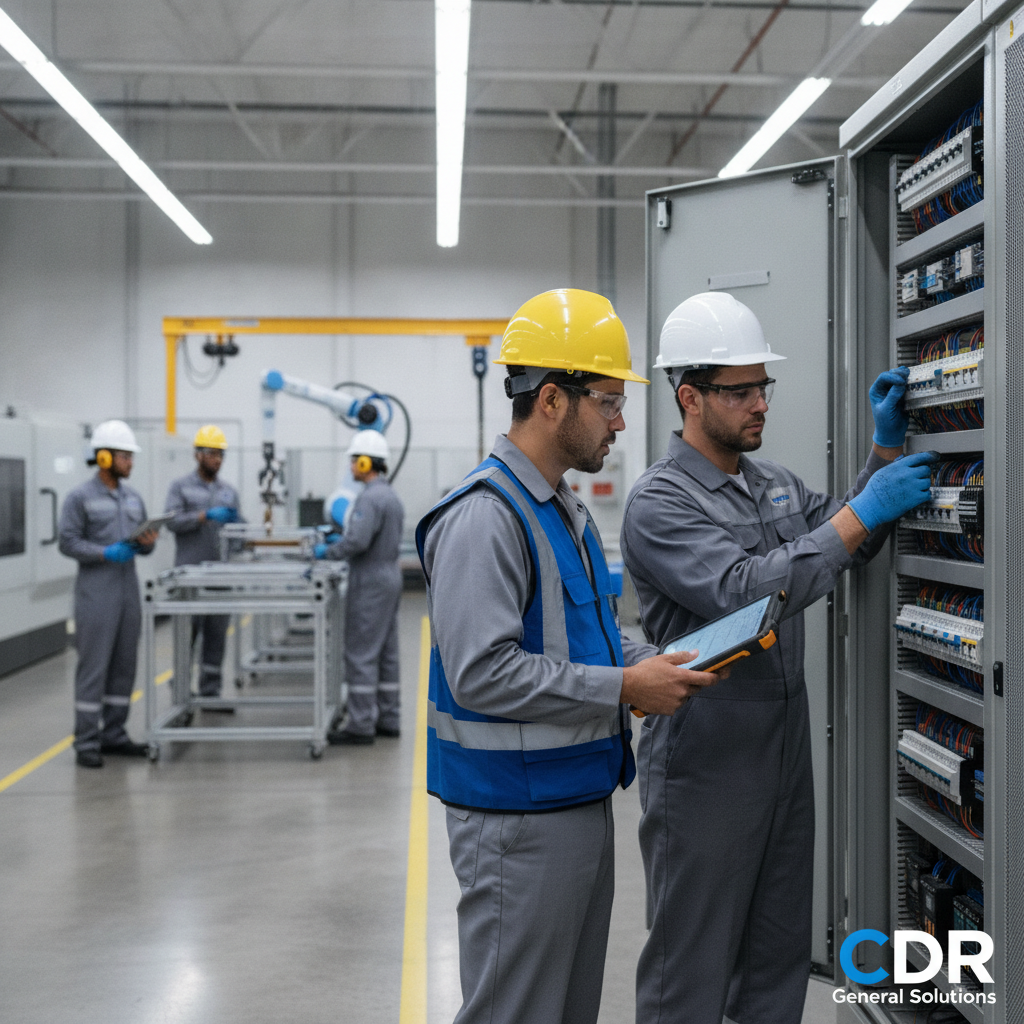
In the world of switchboard and control panel assembly, precision is everything. An electrical schematic is the absolute source of truth. But what happens when a skilled assembler misinterprets a symbol or overlooks a critical note? The consequences are far more than just a blown capacitor or a faulty connection. A single misread schematic can lead to thousands of dollars in scrapped materials, hours of expensive rework, and catastrophic project delays. For DFW manufacturers building complex systems for data centers or industrial automation, this hidden cost can be devastating. It erodes client trust, damages your reputation, and can even lead to contractual penalties. The problem is that a resume can’t tell you if an assembler can *truly* read and apply a complex schematic under pressure. Without proper vetting, you’re rolling the dice with every new hire.
The Revolving Door: Why Your Best Workers Are Leaving
High turnover is one of the most persistent and costly challenges facing DFW’s industrial sector. Finding and training new employees is a massive drain on resources, but the real cost is the loss of institutional knowledge and the constant disruption to team chemistry and productivity. So why are good people leaving? Often, it’s because they don’t feel valued, supported, or connected to the company’s mission. This is where a concept that many procurement officers are familiar with—supplier diversity—has a surprising and powerful impact on workforce retention. When a company makes a conscious choice to partner with suppliers from diverse backgrounds, such as Minority-Owned (MBE) or Disabled Veteran-Certified (DVBE) businesses, it sends a powerful message to the entire workforce. It shows a commitment to inclusion and community that resonates with employees, making them feel part of something bigger and fostering a more loyal, stable team.
A Three-Pronged Strategy for Operational Excellence
Addressing these risks requires more than a simple fix; it demands a strategic, integrated approach. By focusing on leadership, technical precision, and strategic partnerships, DFW companies can build a more resilient, safe, and productive operation.
Implementing Proactive Safety with Bilingual Floor Leadership
The most effective way to bridge the safety gap in a multilingual workforce is to install bilingual floor leaders. A leader who can fluently communicate in both English and Spanish does more than just translate; they build trust. They can ensure that safety briefings are not just heard, but understood. They can answer questions in real-time, clarify complex procedures, and create an environment where Spanish-speaking employees feel comfortable reporting potential hazards without fear of being misunderstood or dismissed. This proactive communication is the key to preventing accidents before they happen, leading to fewer OSHA incidents, lower insurance premiums, and a stronger safety culture.
From Blueprint to Bottom Line: The Power of Technical Vetting
To eliminate the hidden costs of schematic misinterpretation, you must move beyond the resume and implement rigorous, hands-on technical vetting. Before a control panel assembler even steps on your floor, they should be tested on their ability to read and interpret the specific types of electrical schematics and blueprints your company uses. This isn’t a generic skills test; it’s a practical evaluation of their real-world capabilities. This process weeds out candidates who look good on paper but lack the requisite precision, ensuring that the person you hire can contribute accurately from day one. It transforms hiring from a gamble into a calculated investment in quality and reliability.
More Than a Checkbox: How Supplier Diversity Builds a Better Workforce
Engaging with a diverse supplier, like a certified MBE or DVBE staffing agency, is not just about meeting a procurement goal; it’s a strategic move to enhance your workforce. These firms often have deeper roots and greater trust within diverse communities, giving them access to a more dedicated and loyal talent pool. When your employees see that your partners reflect the diversity of your own team and community, it reinforces a culture of respect and inclusion. This sense of shared values is a powerful driver of employee engagement and has been shown to significantly improve long-term workforce retention. It demonstrates that your company is invested in the economic health of the entire community, which builds a stronger, more stable organization from the inside out.
Why Generic Staffing Fails and How CDR General Solutions Succeeds
Many national, mega-franchise staffing agencies treat industrial staffing as a numbers game. They focus on filling quotas, often sending warm bodies without the specific skills or cultural fit your operation demands. This approach fails to address the critical risks of safety, technical accuracy, and retention. At CDR General Solutions, we operate differently. We are a local, DFW-focused, and certified Minority-Owned & Disabled Veteran-Certified (DVBE / MBE) agency built on precision and partnership.
We Speak Their Language: Bilingual Onboarding and Safety Leadership
We don’t just find bilingual candidates; we are experts in building safer, more productive bilingual teams. Our unique process includes sourcing and vetting skilled floor leaders who can bridge the communication gap between your English-speaking management and Spanish-speaking crews. We ensure that safety onboarding is conducted in a language every worker understands, confirming comprehension and establishing a foundation of safety from day one.
Beyond the Resume: Our Hand-in-Hand Vetting for Technical Roles
For highly technical roles like switchboard and control panel assemblers, our vetting process is unmatched in the DFW Metroplex. We conduct in-person, hand-in-hand technical testing that includes blueprint reading, trade math, and detailed schematic evaluations. We don’t just ask if they can do the job; we watch them prove it. This is combined with our “Culture & Attitude-First” interviewing, where we screen for coachability, reliability, and a strong work ethic, ensuring you get a technician who is not only skilled but also a valuable team member.
Your DFW Partner in Growth: The Value of Our DVBE/MBE Certification
Partnering with CDR General Solutions allows your procurement team to meet its supplier diversity goals while your operations team gets a superior workforce solution. Our DVBE/MBE certifications are a reflection of our commitment to discipline, integrity, and excellence. As a local, agile partner, we don’t have the bureaucracy of a national chain. We provide a hyper-responsive, hands-on service tailored to the unique demands of the DFW industrial market. We are your partners in mitigating risk and driving growth.
The CDR Approach vs. The National Franchise Model
| Feature | National Franchise Model | CDR General Solutions (Your DFW Partner) |
| :— | :— | :— |
| **Vetting Process** | Keyword scans, phone screens | Hand-in-hand technical testing (schematics, blueprints), attitude-first interviews |
| **Safety & Communication** | Assumes English proficiency | Bilingual onboarding, sourcing of bilingual floor leaders to ensure OSHA compliance |
| **Technical Accuracy** | Relies on candidate’s resume | Verifies skills with practical, job-specific evaluations before placement |
| **Retention Impact** | Transactional placements, often leading to high turnover | Culture-first screening and supplier diversity partnership fosters loyalty and retention |
| **Local Knowledge** | One-size-fits-all national approach | Deep DFW market expertise, agile and responsive to local needs |
| **Commitment** | Fills a quota | Zero No-Show Commitment with 24-hour pre-shift confirmations |
Frequently Asked Questions
- How does a bilingual floor leader actually prevent OSHA violations?
- A bilingual leader prevents violations by ensuring 100% comprehension of safety rules. They can explain complex procedures like lockout/tagout in Spanish, confirm understanding through conversation, and create a safe space for workers to ask questions. This direct communication eliminates the misinterpretation that often leads to accidents and citations.
- What kind of technical testing do you perform for switchboard assemblers?
- Our testing is practical and job-specific. We provide candidates with actual electrical schematics and blueprints similar to what they would see on the job. We evaluate their ability to identify symbols, trace circuits, understand component layouts, and explain the assembly process. This goes far beyond a resume to verify true technical competence.
- Does working with a minority-owned (MBE) staffing agency really help with employee retention?
- Absolutely. Partnering with an MBE or DVBE agency demonstrates a tangible commitment to diversity and community investment. This resonates with a diverse workforce, fostering a more inclusive and respectful company culture. Employees who feel valued and see their company making ethical choices are more engaged, more productive, and far more likely to stay long-term.
Ready to Fortify Your DFW Operations?
Stop letting preventable risks dictate your success. It’s time to partner with a staffing agency that understands the unique challenges of the DFW industrial landscape. CDR General Solutions provides the vetted, reliable, and skilled workforce you need to enhance safety, ensure precision, and build a team that lasts.
Call us now at 972-670-3010 to speak directly with one of our staffing specialists!
Or, if you prefer, fill out the contact form on our website, and we will reach out to schedule a complimentary, no-obligation consultation to assess your needs.